
Ines Simmons · 12 September 2026
Navigating Compliance Challenges in Digital Note Platform Ecosystems
Digital note platforms operate across interconnected ecosystems where users create, store, and share information in real time, and regulatory frameworks require operators to address data handling, access controls, adn retention policies simultaneously, while platforms must align technical features with legal obligations that differ by jurisdiction and content type. Research from multiple oversight bodies indicates that these ecosystems face layered requirements because notes often contain personal data, intellectual property, and collaborative edits that trigger distinct compliance categories at once.
Data Protection Frameworks Across Regions
European regulations such as the General Data Protection Regulation establish consent mechanisms and data subject rights that digital note services must embed into their architectures, and operators respond by implementing granular permission settings that allow users to request exports or deletions without disrupting shared workspaces. Data shows that similar obligations appear in Canada's Personal Information Protection and Electronic Documents Act along with Australia's Privacy Act, each demanding breach notification timelines measured in days rather than weeks. Observers note that platforms serving multiple continents therefore maintain region-specific data processing agreements that route information through designated storage locations to satisfy localization rules.
Those who manage these systems often discover that a single note containing both user-generated text and embedded third-party references can fall under several overlapping statutes, and this intersection forces teams to maintain audit logs that record every access event along with the legal basis for processing. Figures from industry reports reveal that organizations allocating dedicated compliance roles achieve faster alignment with evolving standards compared to those treating obligations as periodic reviews.
Security and Access Management Requirements
Encryption standards mandated by frameworks such as the NIST Cybersecurity Framework in the United States require digital note platforms to protect data both at rest and in transit, and administrators configure multi-factor authentication alongside role-based access that limits visibility according to project membership rather than broad organizational charts. Studies conducted by academic institutions highlight how unauthorized internal access remains a leading vector for incidents, prompting platforms to integrate session monitoring that flags unusual query patterns across large note repositories.
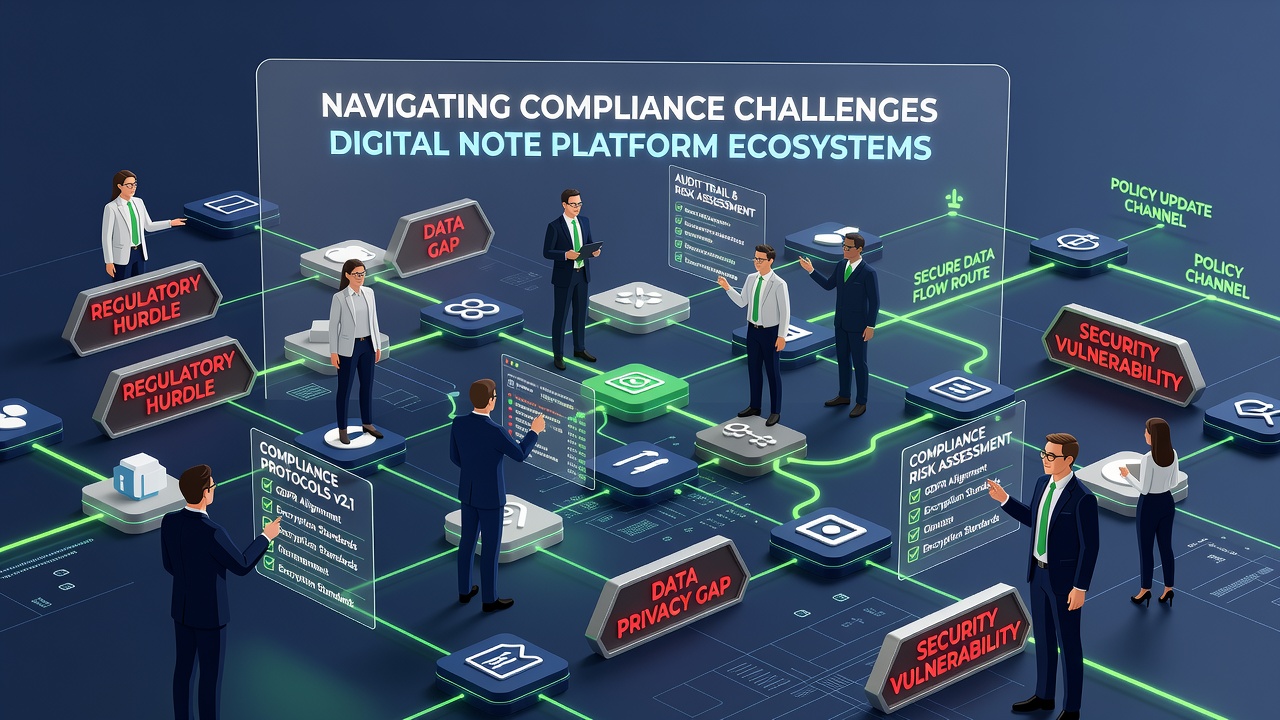
Platform operators also address retention schedules that vary by content sensitivity, and automated policies delete or archive notes once retention periods expire while preserving necessary metadata for regulatory inquiries. Experts have observed that combining these controls with regular penetration testing reduces exposure windows, yet the complexity grows when third-party integrations such as calendar connectors or file importers pull additional data streams into the same environment.
Cross-Border Transfers and Emerging Updates
Transfers of note data between jurisdictions encounter restrictions outlined in adequacy decisions and standard contractual clauses, and platforms address these by mapping data flows to identify which notes cross borders during routine synchronization. As amendments to several international agreements approach implementation phases around September 2026, operators are updating their transfer impact assessments to account for new oversight mechanisms that examine processor accountability in greater detail. Research indicates that organizations maintaining living inventories of subprocessors experience smoother transitions when rules change because they can adjust contracts before deadlines arrive.
One study revealed that collaborative features introduce additional variables because multiple users in different countries may edit the same note simultaneously, and this activity generates logs that must satisfy each participant's local authority. Platforms therefore design export tools that tag content with jurisdictional markers, enabling legal teams to review transfers before they occur rather than after disputes arise.
Intellectual Property and Content Moderation
Digital note ecosystems must also navigate copyright and trademark considerations when users upload images, scanned documents, or linked resources, and operators respond with automated scanning that flags potential matches against registered works while preserving user appeal processes. Industry associations report that clear terms of service combined with notice-and-takedown procedures reduce liability exposure, yet the volume of daily uploads requires scalable review systems that balance speed with accuracy. Those who've examined enforcement actions note that platforms providing transparent reporting channels tend to resolve disputes more efficiently than those relying solely on automated filters.
Conclusion
Compliance within digital note platform ecosystems demands continuous coordination between legal, engineering, and operations teams because regulations evolve and user behaviors shift the risk profile of stored content. Organizations that embed policy checks into development workflows maintain operational continuity while meeting obligations across multiple regions, and this integrated approach supports both user trust and regulatory standing over time.